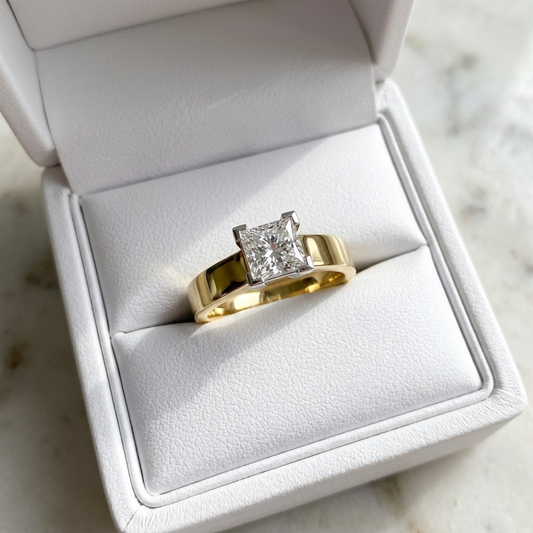
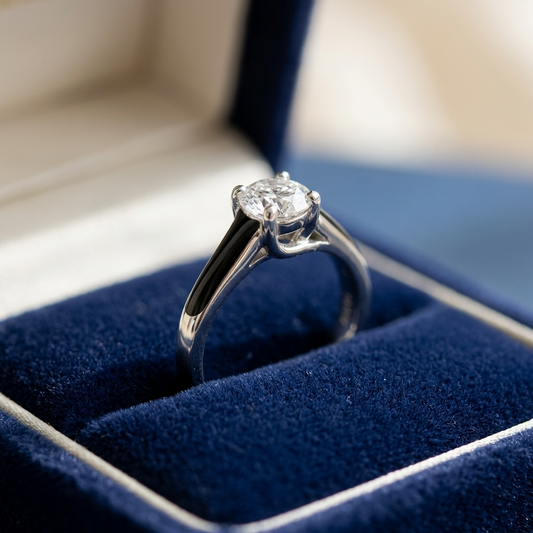
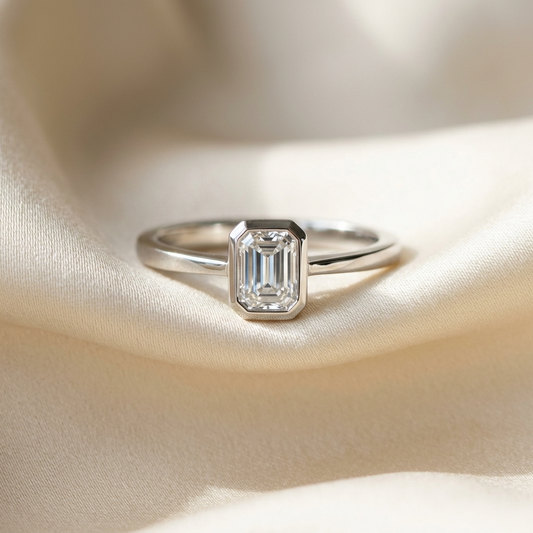
Collection: Solitaire Diamond Engagement Rings

Buy Classic Solitaire Diamond Engagement Rings — Sydney & Australia-Wide

The solitaire diamond engagement ring is the most timeless and iconic engagement ring style in the world — a single, beautiful centre diamond held high in a clean setting that lets the stone be the absolute star. With nothing to distract the eye, a solitaire ring puts every ounce of attention on the quality, cut, and sparkle of the centre diamond — making it the best engagement ring style for buyers who want pure classic elegance and a ring their partner will love for a lifetime. Solitaire engagement rings have been the most popular engagement ring style for over a century, and they remain the benchmark against which every other ring design is measured.

Diamond Imports designs and handcrafts solitaire engagement rings to order in our Sydney workshop, with every ring built around a centre diamond you choose yourself. Every centre stone is a 100% natural diamond — we do not sell lab-grown or synthetic diamonds — and most carry GIA certification (the world's most trusted diamond grading authority), with others certified by DCLA or IGI. Choose your preferred diamond shape — round brilliant, princess cut, oval, cushion, emerald cut, pear, marquise, or any other shape from our extensive loose diamond inventory — then choose your setting style: classic 4-claw, secure 6-claw, modern bezel, knife-edge band, or a custom design built to your specifications. All solitaire rings are handcrafted in 18 karat white gold, yellow gold, rose gold, or platinum.
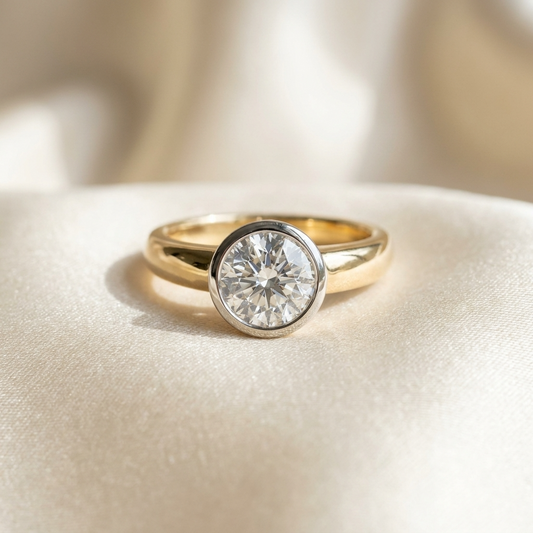
As a direct diamond wholesaler based in Sydney CBD, we offer wholesale pricing on every solitaire diamond engagement ring we make — direct to the public, no retail markup. Whether you're sourcing a classic round brilliant solitaire, designing a modern oval solitaire with a thin band, or commissioning a unique custom solitaire engagement ring, our Sydney showroom is open by appointment and we ship completed rings Australia-wide — Melbourne, Brisbane, Perth, Adelaide, Canberra, and Darwin — fully insured. Browse the solitaire engagement ring collection above, or get in touch to begin your custom solitaire design consultation.

Frequently Asked Questions

What is a solitaire engagement ring?

A solitaire is a ring set with a single stone and no side stones. The word describes the arrangement, not the setting — a solitaire can be held in claws, a bezel, or almost anything else. What defines it is that one diamond carries the whole ring.

Why should I choose a solitaire for my engagement ring?

Because it puts everything into the diamond. There is nothing else on the ring to look at, so the stone has to be good — and if it is, nothing shows it better.

It is also the design that has outlasted every trend. Halo, hidden halo, east-west, toi et moi all move in and out of fashion; a solitaire from 1960 does not look dated. If you are buying something to wear for fifty years, that matters.

Practically, it is the easiest style to live with. Nothing to catch, fewer settings to maintain, and it sits flat against a wedding band without needing a shaped one.

What styles can a solitaire ring come in?

Solitaire describes a single stone, not a single design. There is real variety in how that stone is held, and the choice changes the ring considerably.

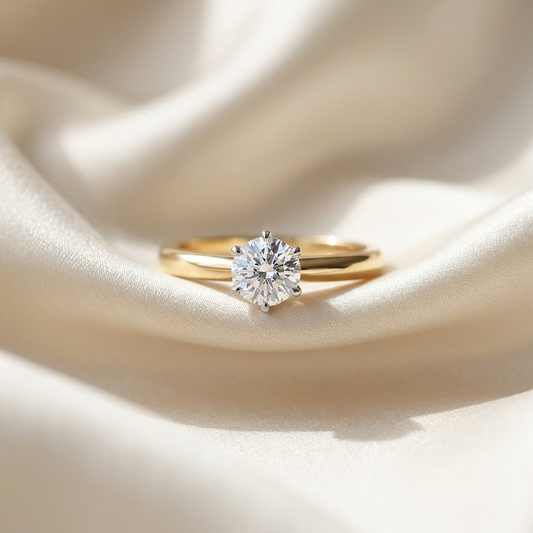
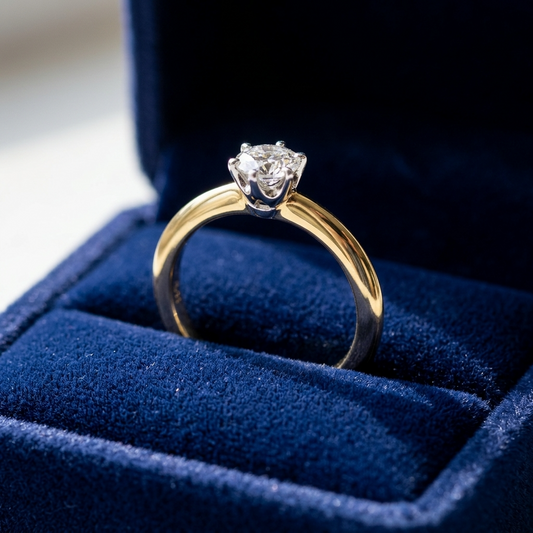
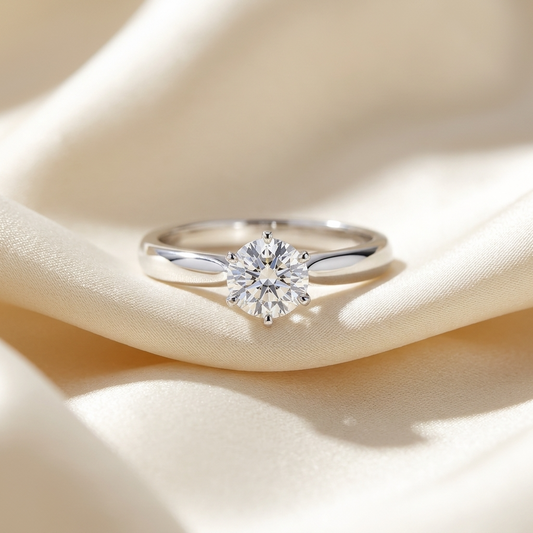
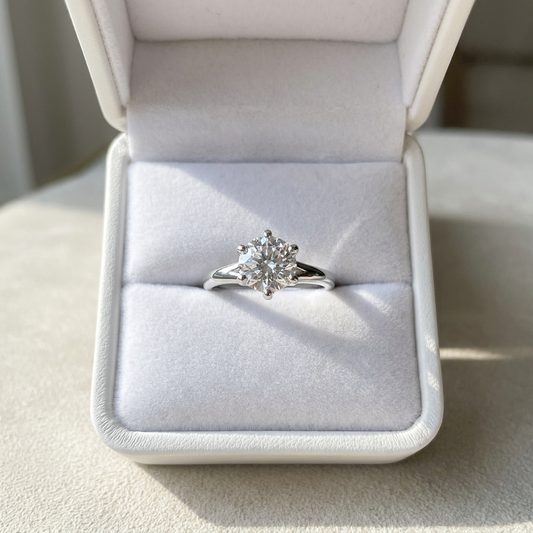
Six claw classic — the traditional setting, stone raised on a slim band with six evenly spaced claws. Secure, timeless, and the reference point for the whole category.

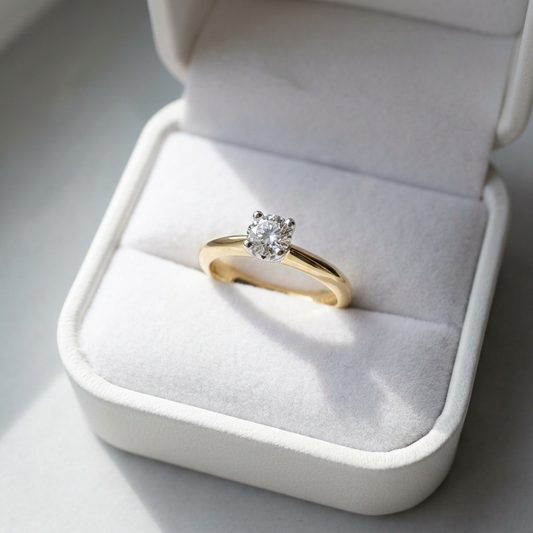
Four claw modern — the same idea with four claws instead. Less metal over the stone, so more of the diamond shows and the outline reads cleaner. The contemporary preference.

Cathedral — arches sweep up from the band to meet the setting, like the vaulting of a cathedral. It supports the stone visually and makes a modest diamond look more substantial.

Basket — the stone sits in a woven cradle of metal below the claws, which lowers the profile and lets light in from the sides. Comfortable and hard-wearing.

Trellis — the claws cross over one another beneath the stone in a woven pattern. Elegant from the side, and the crossing metal adds strength.

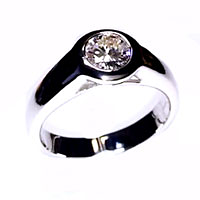
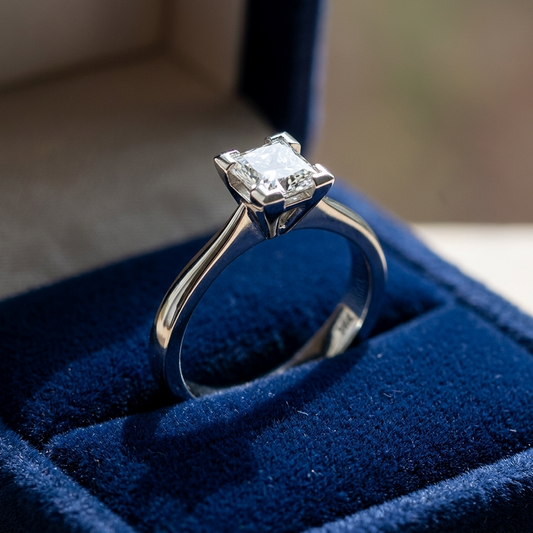
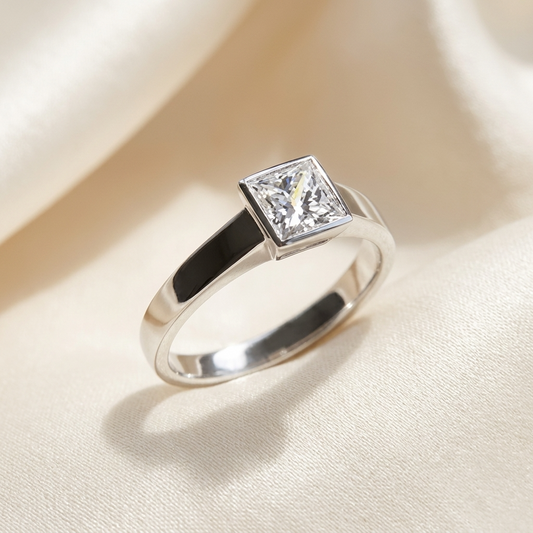
Bezel — a continuous rim of metal wraps the entire girdle. The most secure setting there is, completely snag-free, and it reads as modern and architectural. Excellent for anyone working with their hands.

Half bezel — metal on two sides only, leaving the other two open. Much of the security of a full bezel with more of the stone visible.

Tension set — the stone appears to float, held by the pressure of the band alone. Striking and unusual. It needs precise work and it is harder to resize later, so it is a design to choose deliberately.

Cross over — the band splits and the two ends cross past each other around the stone, giving movement and asymmetry rather than a straight line.

Diamond accent — small stones set into the claws, gallery or shoulders. Still a solitaire, but with a little extra light where you do not expect it.

All of these are made to order in our own workshop, so the setting can be built to suit your particular stone rather than the stone dropped into a standard mount.

Four claws or six claws?

Four shows more of the diamond and gives a cleaner, more modern outline — the stone reads slightly larger because less of it is covered. Six holds more securely, distributes the pressure better, and is the safer choice for a larger stone or someone hard on their hands.

Both are entirely correct. On a round we would lean six for anything above about 1.50ct and four below that, but it is a look as much as a decision, and worth seeing both.

What diamond shapes suit a solitaire?

All of them, which is part of the appeal. A solitaire is the only style that flatters every shape equally, because there is nothing beside the stone to clash with its outline.

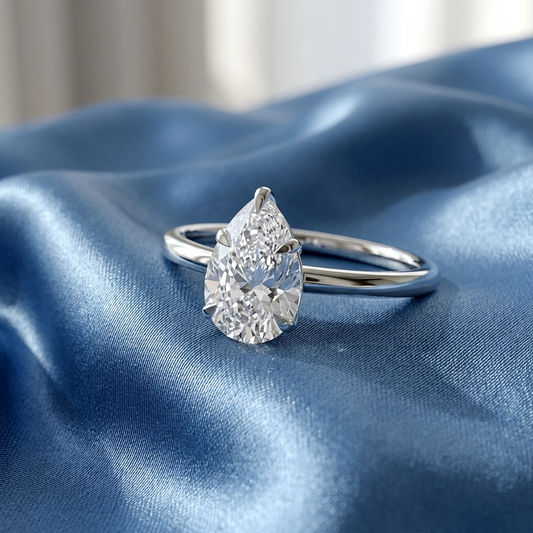
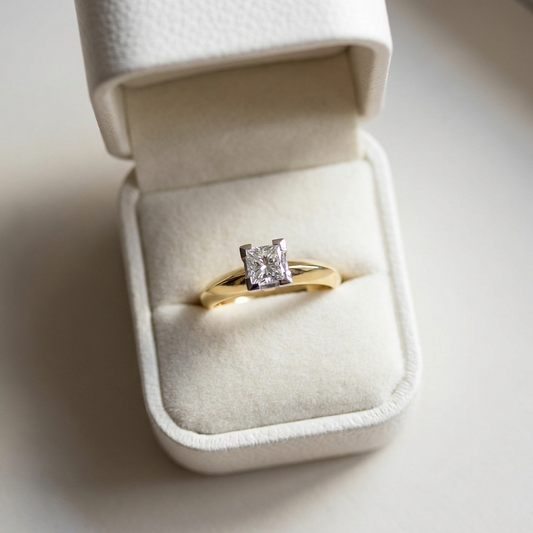
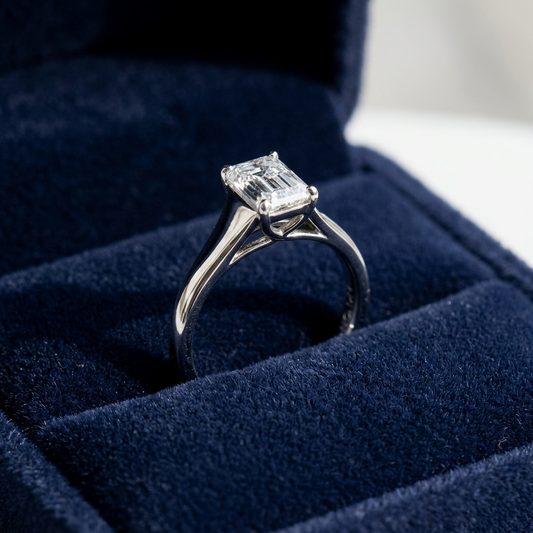
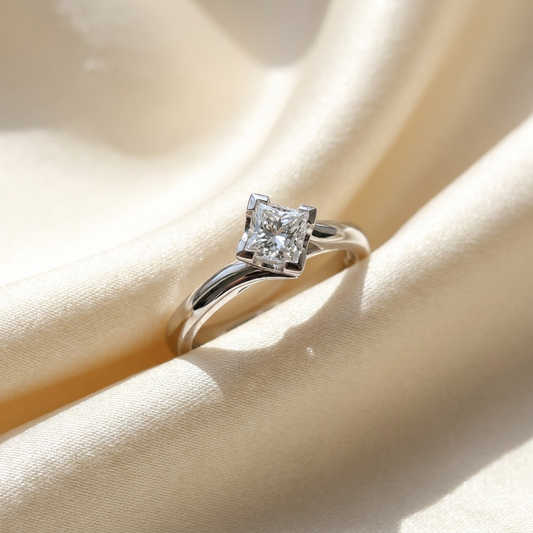
Round is the classic. Oval and emerald cut both look elegant set alone and elongate the finger. Pear, marquise and heart want a V-prong over the point. Princess wants claws covering the corners. Cushion suits a slightly rounded claw that echoes the outline.

Because there is nowhere for a weak stone to hide, a solitaire is the setting where cut quality matters most.

Can I have a hidden halo or accent diamonds added?

Yes, and both work beautifully on a solitaire.

A hidden halo sets a ring of small diamonds around the base of the centre stone, below the girdle, where you only see it from the side. From above the ring still reads as a clean solitaire; from the side there is a band of light under the stone. It has become one of the most requested details we add.

Accent diamonds can go into the claws, along the gallery, or set into the shoulders. Any of it can be designed in from the start.

Adding to an existing ring is sometimes possible too, though it depends on how the setting was built — bring it in and we will tell you honestly whether it can be done well.

What sort of wedding band goes with a solitaire?

This is where a solitaire is easiest of all the styles. Because there is nothing either side of the centre stone, a plain straight band sits flush against it — no shaping required, which is not true of a halo or a three stone.

From there: a plain band in matching metal is the classic and never looks wrong. A pavé or diamond-set band adds sparkle without competing, since the solitaire has none of its own. A contrasting metal — yellow gold band with a platinum ring, or the reverse — is a quietly modern choice. A curved or shaped band is only needed if the setting sits low enough to interfere, which we would check when we make the ring.

If you know you want a particular band, tell us before we make the engagement ring. It is much easier to design the two together than to match one to the other afterwards.

Do you make sure a wedding band will sit flush against the engagement ring?

Yes, and it is something we plan for rather than fix afterwards.

The gap between an engagement ring and a wedding band comes from the setting — how low the stone sits, how the claws are shaped, whether the gallery flares out at the base. A ring made without thinking about it can leave a visible V-shaped gap, and the usual solution afterwards is a curved band cut to fit around the setting, which works but limits your choices.

We would rather avoid the problem. When we make an engagement ring we design the base so a straight band can sit against it, and if you already know what you would like for the wedding band, we will make them as a pair so they fit exactly.

If you have come to us with a ring made elsewhere, bring it in with the band you have in mind. Sometimes the engagement ring can be adjusted; sometimes a shaped band is the right answer. Either way we will show you both sitting together before anything is made.

Can I have my solitaire ring redesigned?

Yes, and it is a good deal of what we do. Tastes change, rings get worn, and a stone that has been in the same setting for twenty years often deserves a new one.

We can reset the existing diamond into a completely different design, add side stones or a halo, change the metal, or rebuild a worn setting entirely. The stone is usually the valuable part and it comes out unharmed. Bring the ring in and we will look at what is possible.

Can I upgrade my solitaire diamond?

Yes. If you want a larger or better stone, we can source it and reset the ring around it.

The question people do not think to ask is what happens to the original diamond, and the answer we would usually give is: do not sell it, wear it. A stone with history in it makes a lovely pendant — set simply on a fine chain, it becomes the piece you wear every day. A pair of stud earrings if you have got two, or set into a wedding or anniversary band alongside the new ring.

It is almost always a better outcome than trading it in, and it means the diamond you were originally given stays in the family rather than going back into the trade.

Can I design my own solitaire ring?

Yes — most of what we make is designed with the client rather than picked off a shelf. Bring a sketch, a photo, a screenshot, or just a description of what you have in mind. We will talk through the stone, the setting style, the band width and profile, and build it from there.

Everything is made to order in our own workshop in Sydney, so the setting is built around your particular diamond rather than the diamond dropped into a stock mount.

What metals can a solitaire ring be made in?

18ct white, yellow or rose gold, or platinum. Platinum is the most hard-wearing and holds claws securely over decades, which matters on a solitaire where a small number of claws carry the whole stone. White gold is plated with rhodium for whiteness and wants re-plating every few years; platinum does not.

Mixed metals work well here — a yellow or rose gold band with a white gold or platinum setting head, so the claws disappear against the diamond while the band stays warm.

Do you sell lab-grown diamonds?

No. Every diamond we sell is a natural diamond, and we've never dealt in lab-grown, simulants or treated stones.

A lab-grown stone is a manufactured product. It's grown in a reactor over a few weeks, then mass produced in unlimited quantities in any size or grade. That's the fundamental difference: a natural diamond took billions of years to form and exists in finite supply, while a laboratory-grown one is a commodity with no ceiling on production. It shows in the pricing — as capacity has scaled, lab-grown prices have fallen steeply and continue to fall, and there is no established secondary market for them.

What you're buying with a natural diamond is scarcity and origin. Rare, and natural. It's why we've never sold anything else. Read our full comparison of natural and lab-grown diamonds.

What certification do your diamonds come with?

Our diamonds are independently certified, most commonly by GIA, with others graded by DCLA or HRD. The certificate is issued by the laboratory, not by us, and it accompanies the stone when it ships.

Can I see a diamond before I buy?

Yes. We are in Sydney's CBD and we see clients by appointment, so you can view stones side by side and compare them in person before deciding.

Can't find the diamond you're looking for?

Just ask us. Finding a particular stone is a large part of what we do, and there's no obligation when you enquire. We'll do our best to source the finest quality natural diamond for you.

Our list is smaller than you'll see on some sites, and that's deliberate. Every diamond here is one we've looked at properly before listing it. Many diamond websites show tens or hundreds of thousands of stones drawn from shared trade lists — diamonds held elsewhere that the seller hasn't seen and won't see unless you order one. It looks like more choice, but nobody has assessed the individual stone, and two diamonds with the same details on paper can look quite different.

So if what you want isn't here, tell us what you're after and what you'd like to spend. We'll look for it, check anything we find ourselves, and only show you stones we'd be happy to recommend. If we can't find the right thing at your budget, we'll say so and talk through the options — sometimes a small change in colour, clarity or size makes all the difference.

Either way, you'll only ever be offered a diamond that we have complete confidence in recommending to you, and it will not just be based on the cheapest price.

Do you make the ring as well as supply the diamond?

Yes. Most clients select the diamond first and then the setting — either one of our existing designs or a fully custom piece made to your description or an image. Everything is handmade by our own jewellers.

I'm not in Sydney — can I still buy from you and have jewellery made?

Yes. We have many loyal customers all over Australia, and we're able to consult by phone and share photos and videos whenever possible.

Distance is not the obstacle people expect. We'll guide you through the options and select the finest quality diamonds and gemstones for you, so you can make an informed decision from wherever you are. The same applies to custom made engagement rings and jewellery — we'll talk you through it and keep you across it as it's made.

We deliver fully insured anywhere in Australia — every capital city, and regional and rural addresses just the same.

If you are able to come in, we'd always rather show you the stones in person — and if you're travelling to Sydney, appointments can be arranged on weekends.