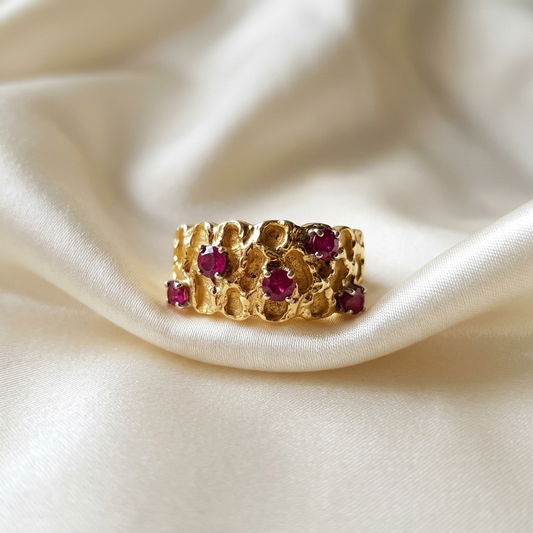
Collection: Ruby Rings

Buy Natural Ruby Rings — Sydney & Australia-Wide

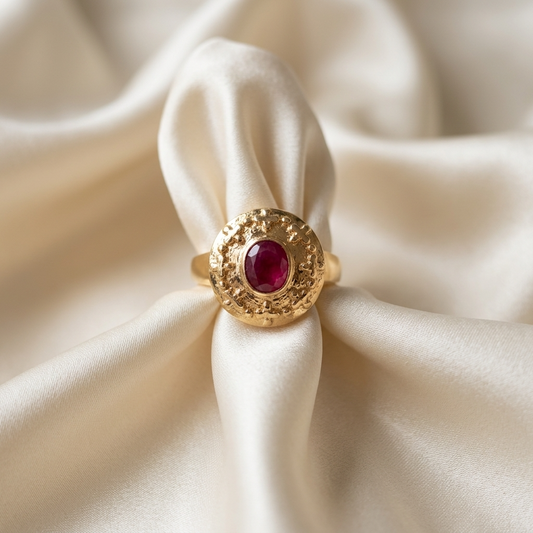
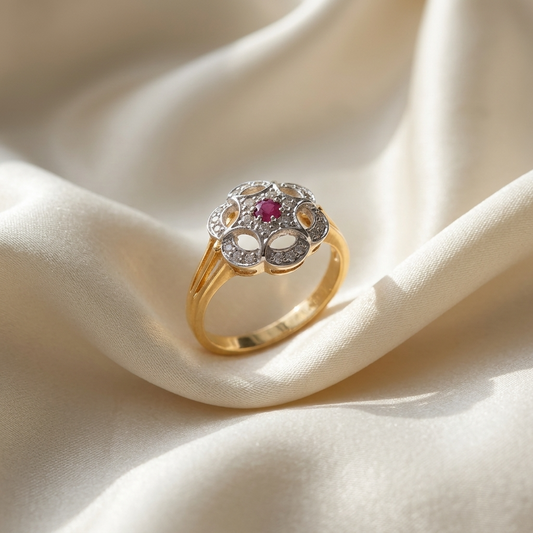
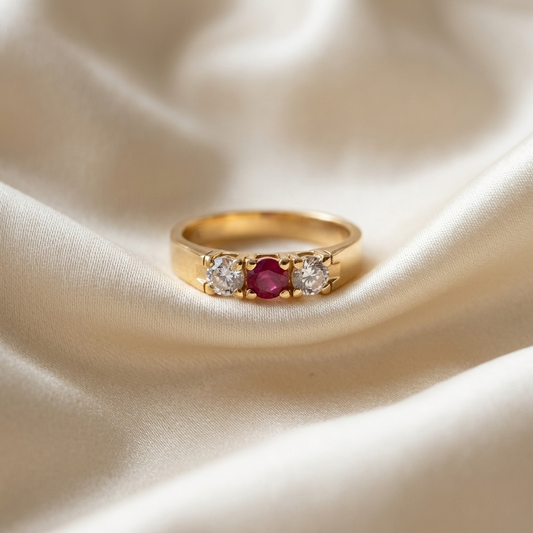
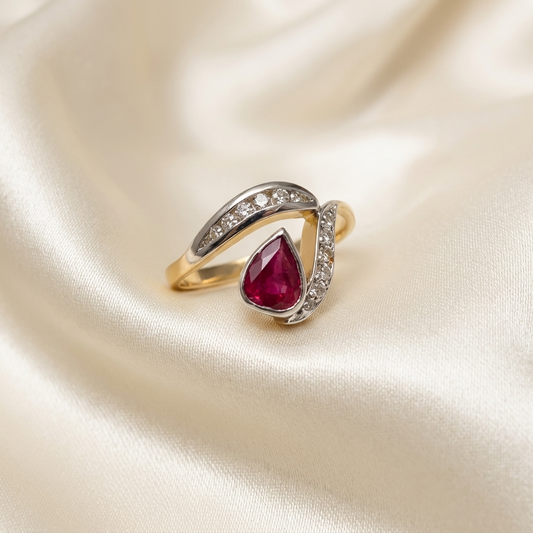
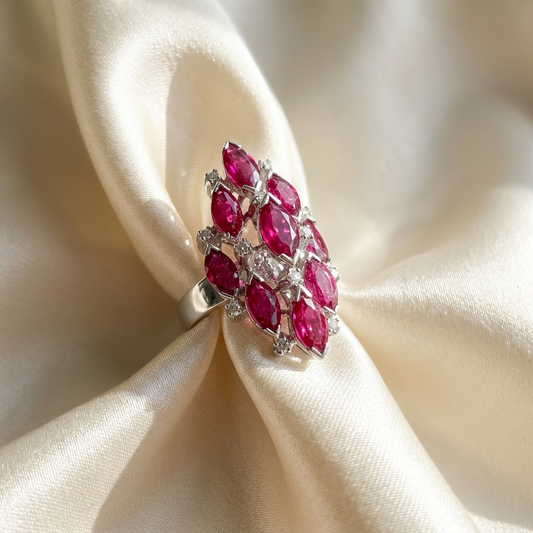
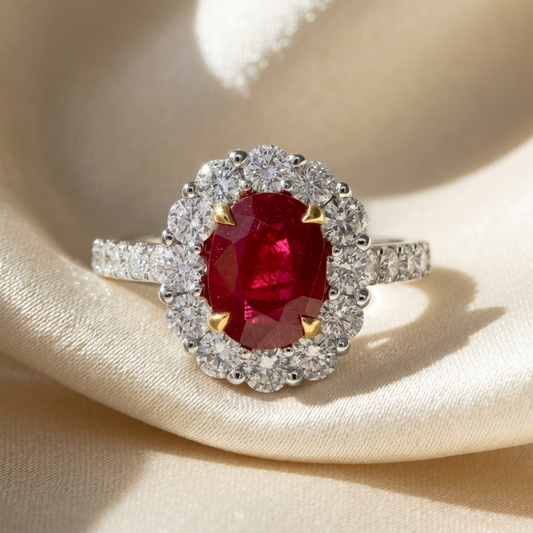
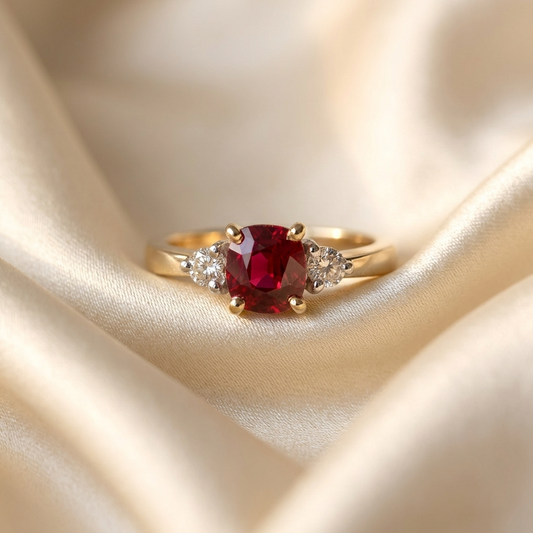
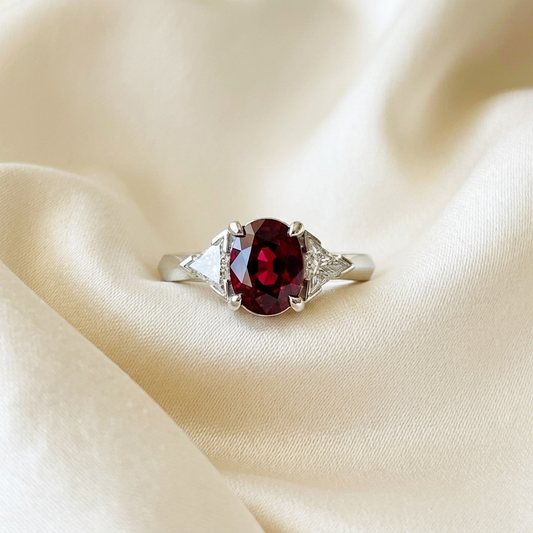
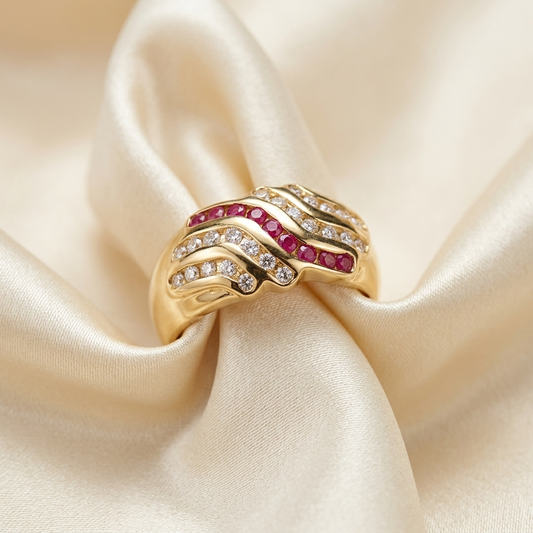
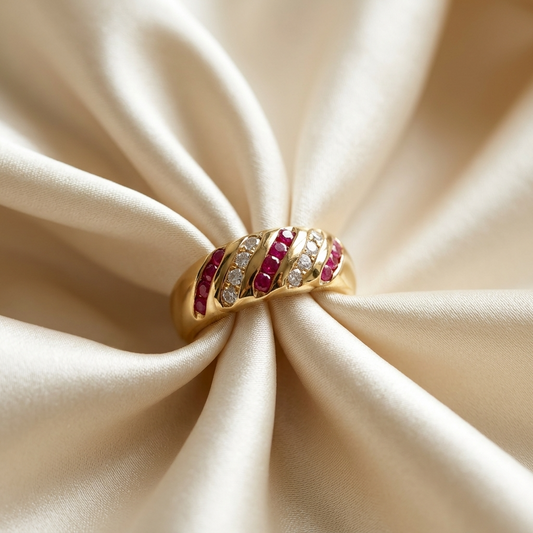
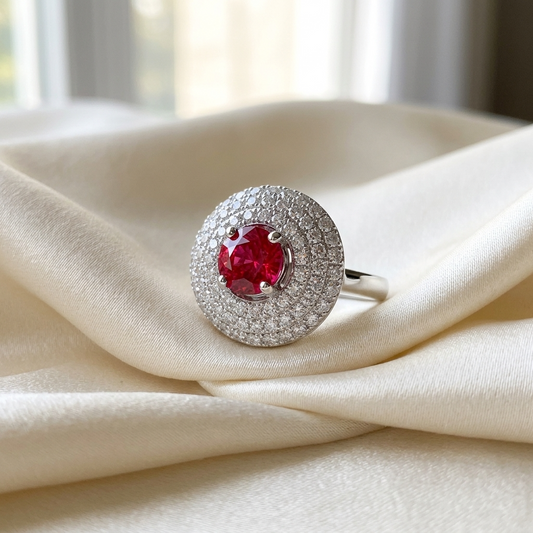
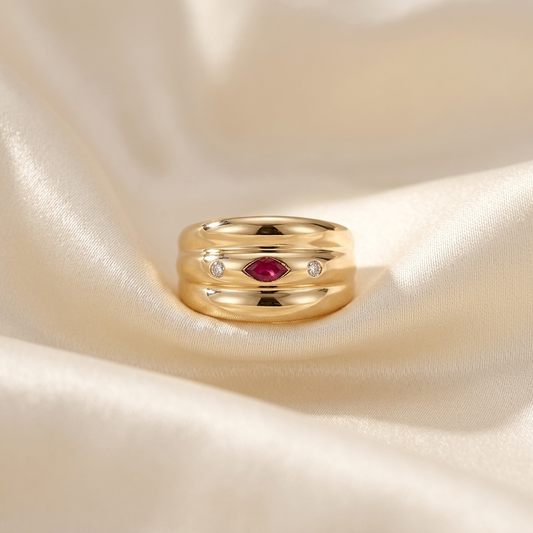
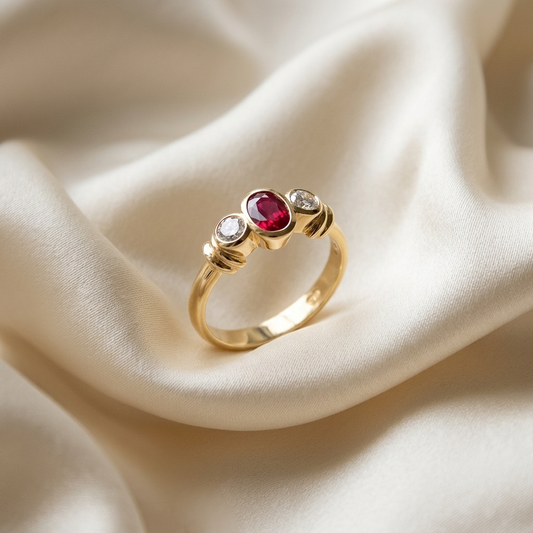
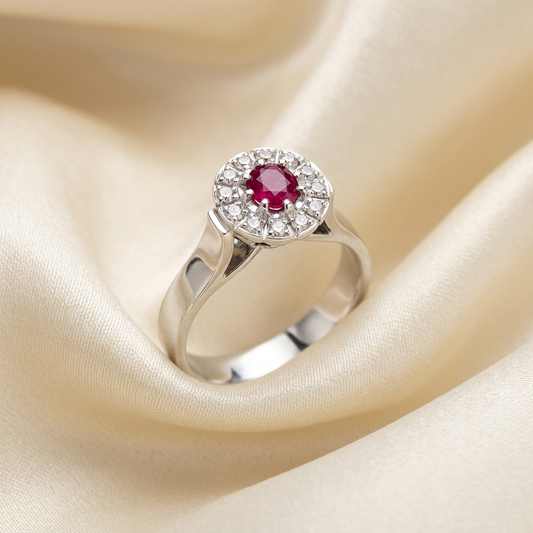
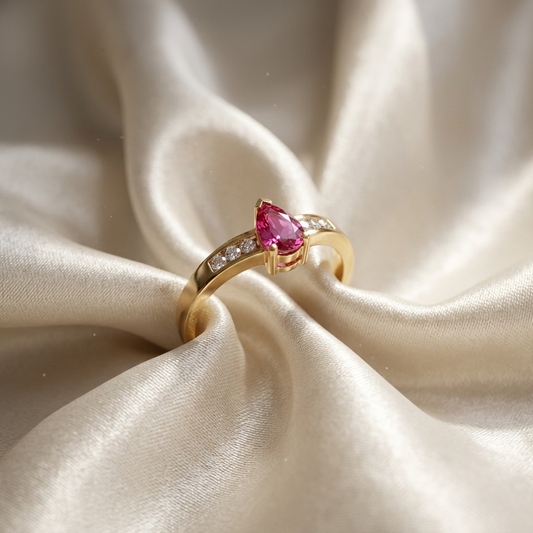
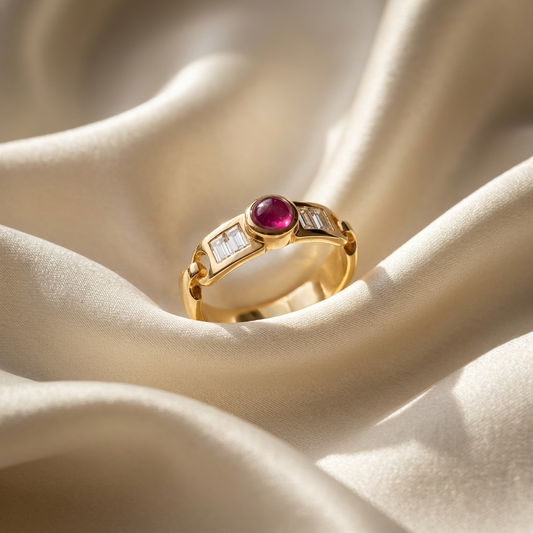
Diamond Imports handcrafts fine natural ruby rings — solitaire, halo, three-stone, and cluster designs — as ruby engagement rings, dress rings, and July birthstone pieces. Every ruby is 100% natural and never glass-filled, diffusion-treated, or lab-grown — an important difference in a market where many "rubies" are heavily treated. Our rubies are sourced from respected origins including Burma (Mogok) and Mozambique, from delicate pink-red tones to the famed "pigeon's blood" red, with any diamond accents GIA-certified. Each ring is set in 18ct gold or platinum. Over 45 years of expertise, based in Sydney CBD and delivered fully insured Australia-wide.

Frequently Asked Questions

Are rubies always red?

Yes, by definition — and that is the whole distinction. Ruby and sapphire are the same mineral, corundum. Red corundum is called ruby; corundum of any other colour is called sapphire. There is no such thing as a blue ruby or a yellow ruby.

Where it gets genuinely interesting is the boundary. Between a deep pink sapphire and a light ruby there is no hard line, and the call is made differently in different markets — a stone sold as ruby in one place might be called pink sapphire in another. It is a judgement, not a measurement.

Within red there is real range. The most prized is a vivid, slightly purplish red, described in the trade as pigeon's blood — strong colour with no brown or orange in it. From there rubies run through cherry and raspberry reds into deeper, darker tones, and some carry an orange or brown modifier that softens the colour.

Colour is what a ruby is bought for, far more than clarity or size. Two stones of the same weight can differ enormously in price on colour alone.

Why are rubies so expensive?

Because fine ruby is genuinely rarer than diamond at the same size and quality.

Large clean rubies with strong colour are scarce — most rough produces small stones or material with too much brown or pink to make top colour. Above two or three carats, fine ruby becomes seriously rare, and the best stones sell for more per carat than almost any other gem, diamond included.

What that means practically is that a smaller ruby of excellent colour is usually a better buy than a larger one of average colour. Colour is what people see. Size is what they measure afterwards.

Are rubies good for engagement rings?

Very. Ruby is corundum, the same as sapphire, at 9 on the Mohs scale — second only to diamond and harder-wearing than almost any other coloured stone. It will take daily wear for a lifetime.

It is also the most striking choice there is. A red centre stone reads as confident and unusual, and against white diamonds the contrast is stronger than any other combination. Ruby suits a halo particularly well, and a pair of white trilliants either side.

Can you recommend other gemstone options?

Yes, and it is worth asking rather than deciding on the first stone you think of.

People often arrive set on a sapphire or an emerald and leave with something they would never have considered — usually because they had not seen it. A few worth knowing about:

Spinel — red, pink, grey and lavender, harder-wearing than most people realise and far less expensive than ruby for a similar look. Historically confused with ruby for centuries.

Tourmaline — an enormous colour range, including strong greens, pinks and the blue-green Paraiba tones.

Aquamarine — clean pale blue, good size for the money, and hard enough for regular wear.

Tanzanite — a violet-blue nothing else quite matches, though softer than sapphire so better in a pendant or a ring that is not worn daily.

Garnet — not the dull red people expect. Tsavorite is a vivid green, spessartite a bright orange, and both are genuinely beautiful.

Fancy colour diamonds if you want colour with diamond durability.

Durability is the thing to think through if the piece is worn every day. Sapphire and ruby handle it best; emerald, tanzanite and opal want more care or a protective setting. We will be straight with you about which is which.

Tell us the colour you are drawn to and roughly what you would like to spend, and we will show you the options — including the ones you had not thought of.

Can I design my own ruby ring?

Yes — most of what we make is designed with the client rather than picked off a shelf. Bring a sketch, a photo, a screenshot, or just a description of what you have in mind.

Ruby suits this particularly well, because you are choosing a stone for its individual colour rather than to a specification. We will show you several, you pick the one you respond to, and we build the ring around it. All made to order in our own workshop in Sydney.

Can you source a loose ruby for me?

Yes, and it is a large part of what we do. Tell us the colour, rough size and what you would like to spend, and we will go and look.

Rubies vary enormously — two stones described identically on paper can be quite different in the hand — so we would rather find several and show you the difference than send you one and hope. If nothing right turns up at your budget, we will tell you and talk through the options.

There is no obligation in asking.

Can you remodel my jewellery?

Yes, and it is some of the most rewarding work we do. An inherited sapphire ring that is not worn, a stone in a setting that is tired or dated, a piece that no longer suits — all of it can become something you would actually wear.

We can reset the existing stones into a new design, combine stones from more than one piece, change the metal, or rebuild a worn setting entirely. The stones are usually the valuable part and they come out unharmed.

Bring the piece in and we will talk about what is possible before anything is decided.

Can you repair my ruby ring?

Yes. Worn or broken claws, a thinning shank, a loose stone, resizing, re-tipping, rhodium re-plating — all done in our own workshop rather than sent away.

Ruby is hard-wearing, so the stone usually outlasts the setting holding it. If a claw has worn thin it is worth attending to before the stone is lost rather than after.

Bring it in and we will look at it and tell you what it needs.

Can I make an appointment to view rubies and discuss my design?

Yes, and it is how most of our work starts.

We are in Sydney's CBD and we see clients by appointment rather than running a shop floor, which means you get the table, the stones and the time — not five minutes between other customers. On ruby that matters more than most, because colour is the whole decision and it has to be seen.

At an appointment you can compare stones side by side under proper light, see how a colour changes against different metals, try settings on to judge scale on your own hand, and talk through the design properly. If you are remodelling something, bring it with you. If you have got images of rings you like, bring those too.

You will be dealing directly with Daniel, and there is no obligation and nothing to pay to come in and look.

Call (02) 9251 4444 or send an enquiry and we will find a time.

I'm not in Sydney — can I still buy from you and have jewellery made?

Yes. We have many loyal customers all over Australia, and we're able to consult by phone and share photos and videos whenever possible.

Distance is not the obstacle people expect. We'll guide you through the options and select the finest quality diamonds and gemstones for you, so you can make an informed decision from wherever you are. The same applies to custom made engagement rings and jewellery — we'll talk you through it and keep you across it as it's made.

We deliver fully insured anywhere in Australia — every capital city, and regional and rural addresses just the same.

If you are able to come in, we'd always rather show you the stones in person — and if you're travelling to Sydney, appointments can be arranged on weekends.

  • Sapphires

    The most popular coloured gemstone in the world — prized for their depth of colour and exceptional hardness. Beyond the classic royal blue, sapphires occur in pink, yellow, green, and rare parti-colours. Every loose sapphire is selected for it's colour, clarity, and cut.

    Loose Sapphires 
  • Emeralds

    The green gemstone of kings and queens. Emeralds are valued for their rich, vivid colour and the unique character of their natural inclusions. Each loose emerald in our collection has been chosen individually for its colour saturation, life, and quality.

    Loose Emeralds 
  • Rubies & Spinels

    Among the rarest and most precious of the coloured gemstones. A fine ruby's red is unmatched in the gem world, while natural spinels — long admired for their brilliance and vivid colour — are treasured by those in the know. Each loose stone is hand-selected by Daniel for colour, clarity, and life.

    Rubies & Spinels