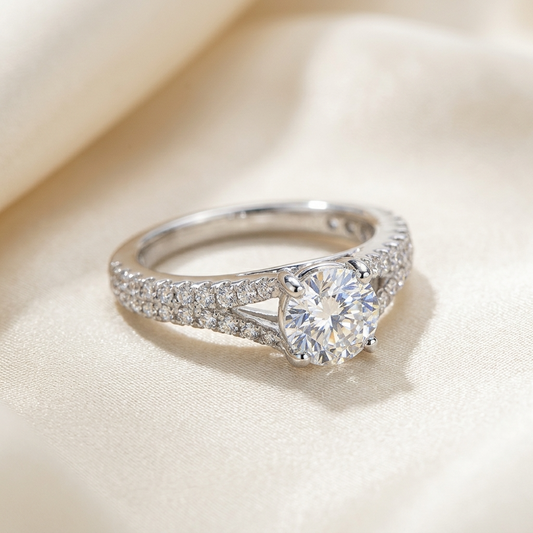
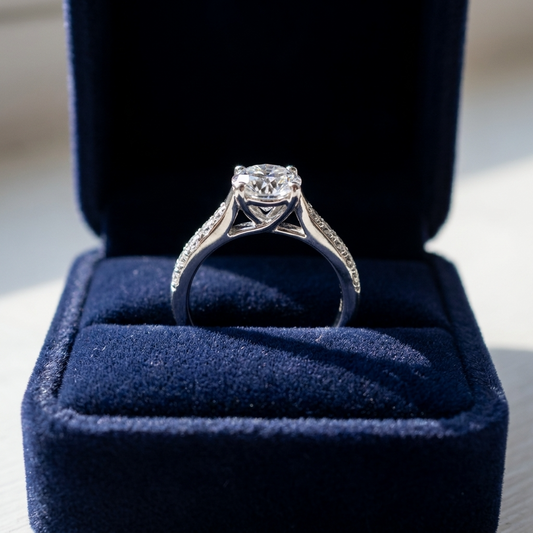
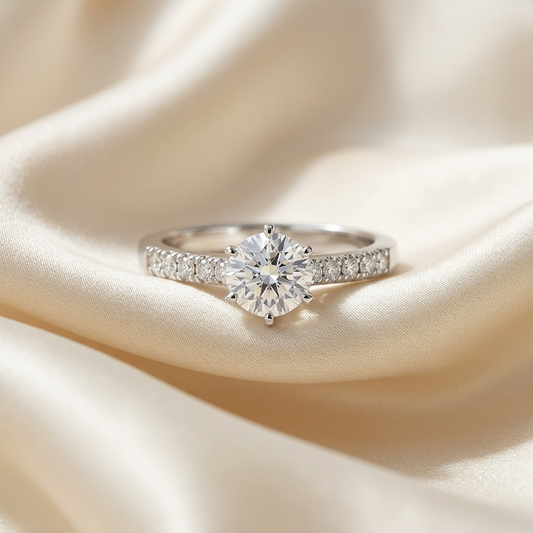
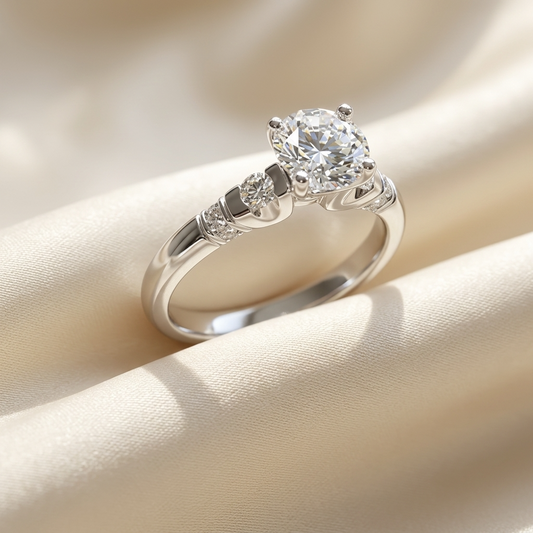
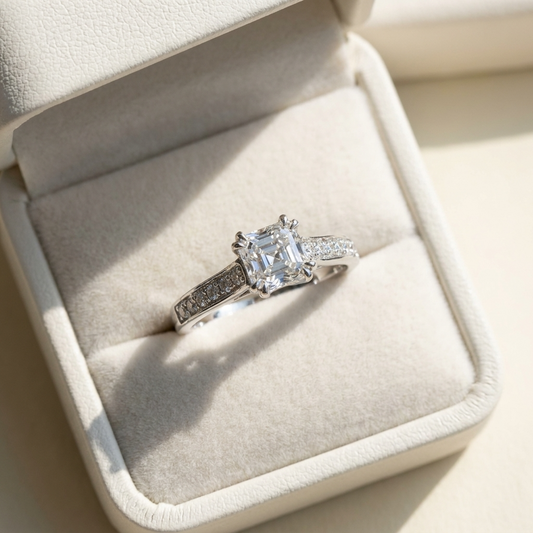
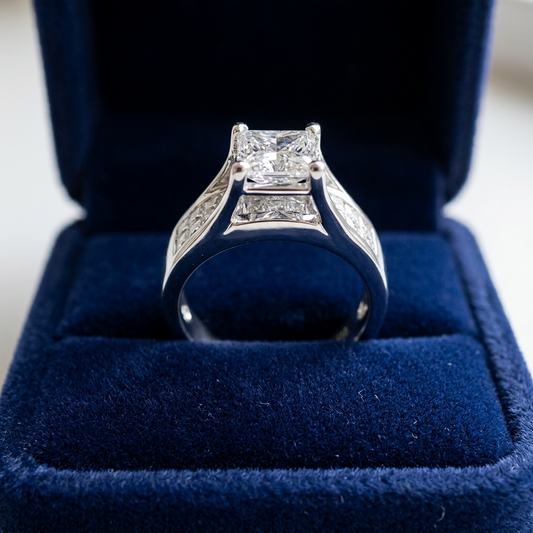
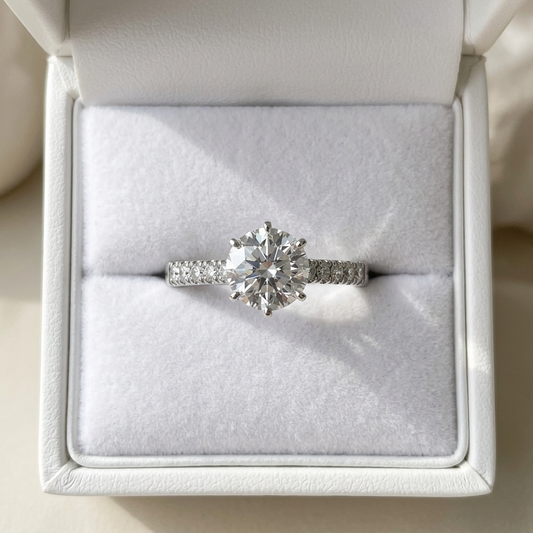
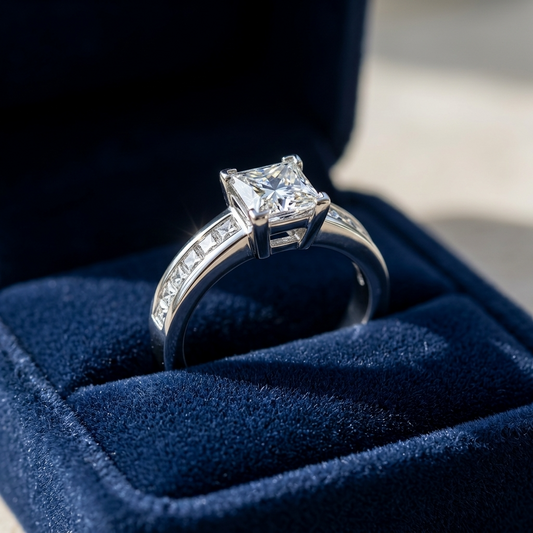
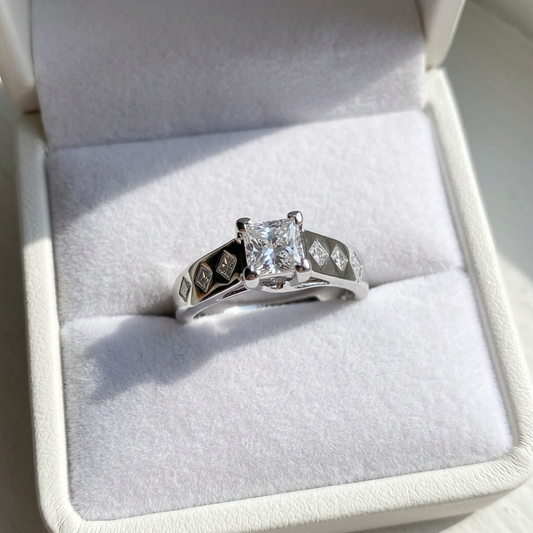
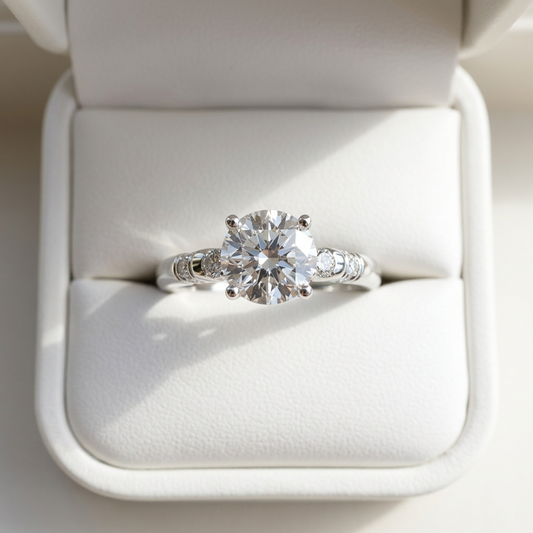
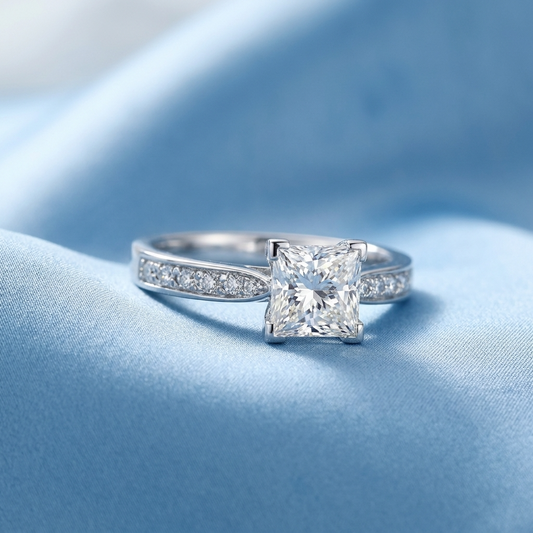
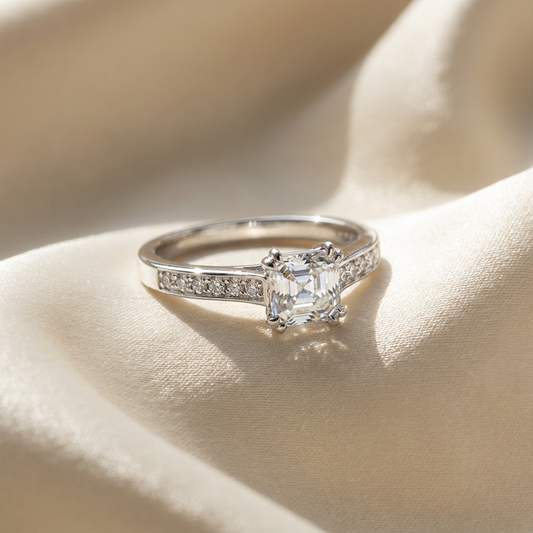
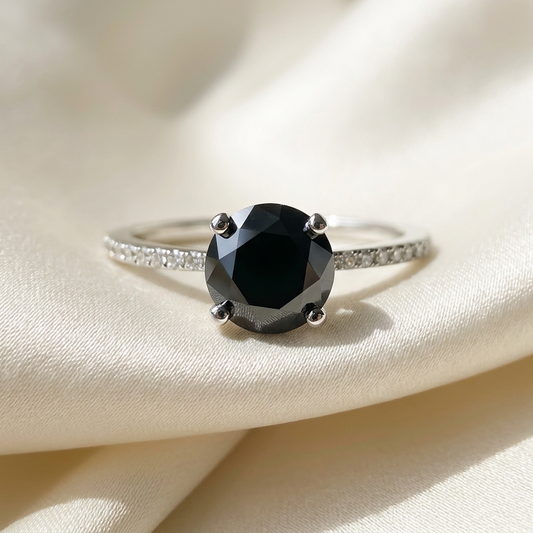
Collection: Engagement Rings with Side Stones

Buy Diamond Engagement Rings with Side Stones — Sydney & Australia-Wide

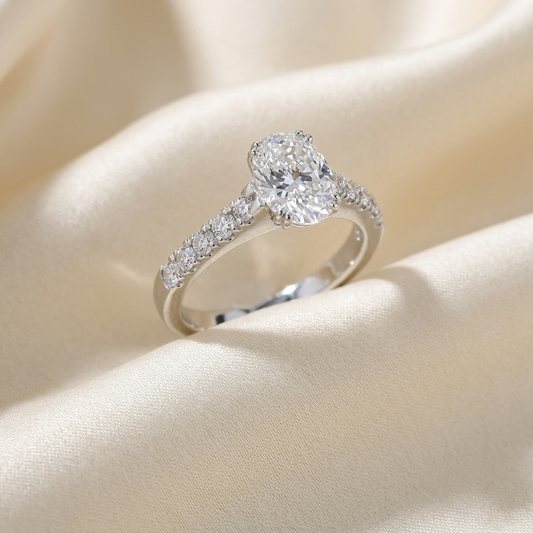
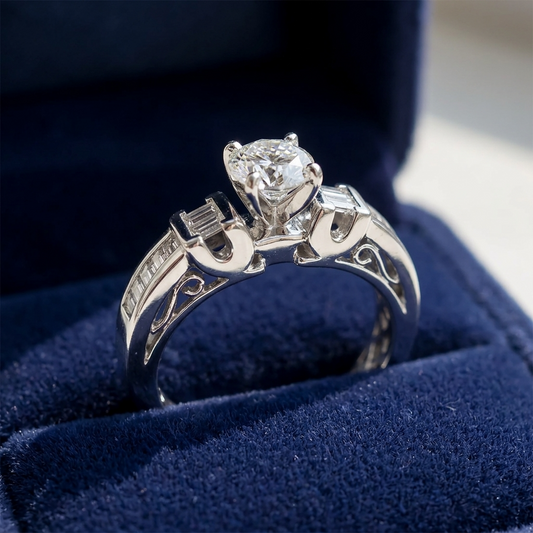
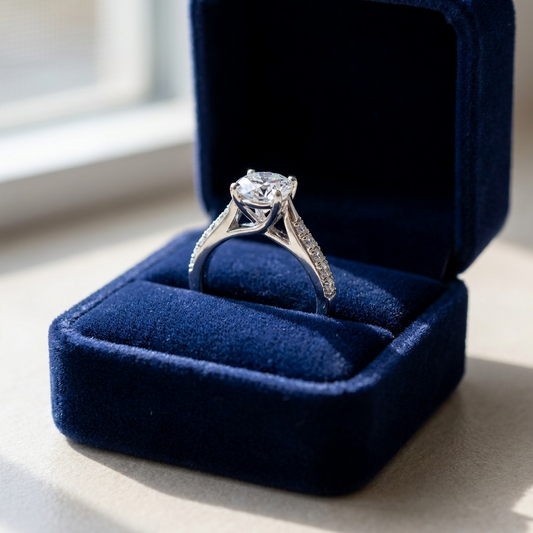
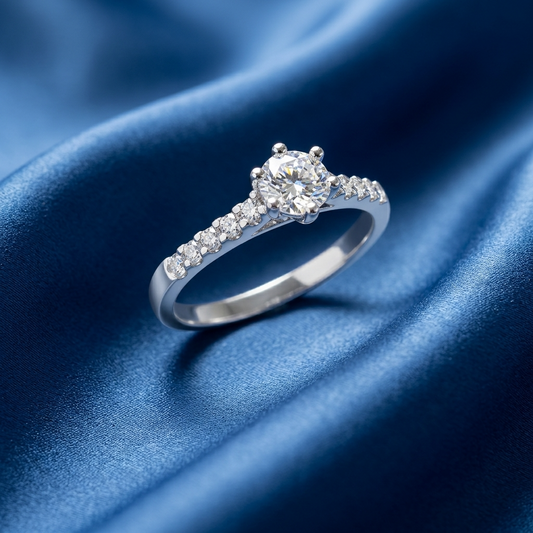
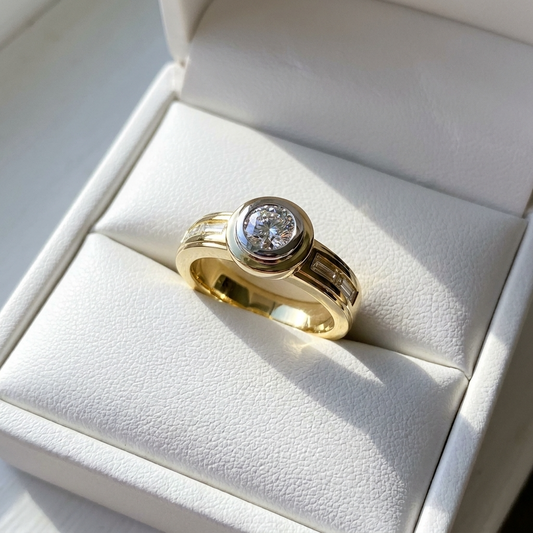
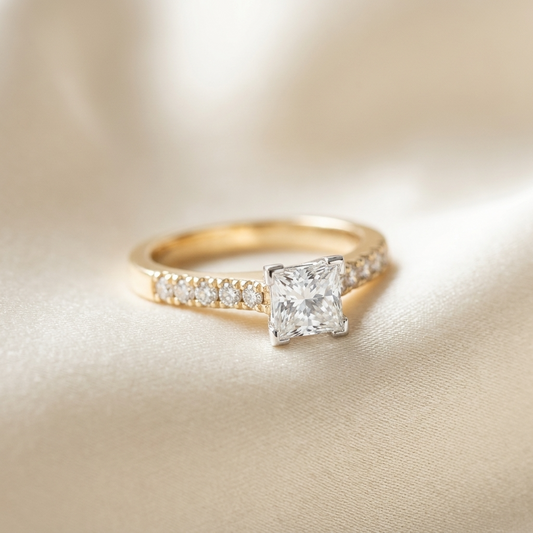
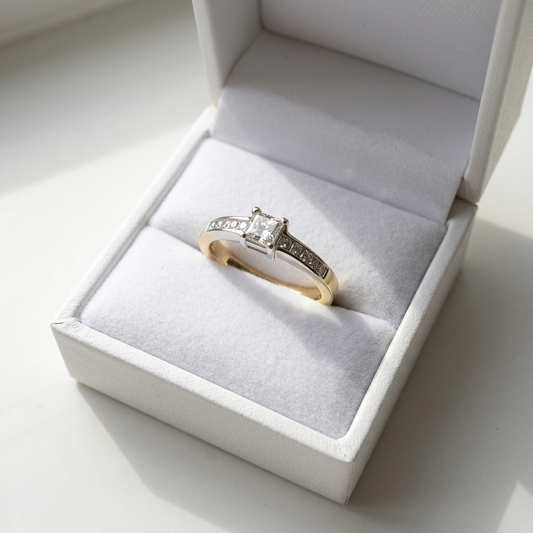
An engagement ring with side stones features a centre diamond flanked by smaller accent diamonds along the band — a beautifully balanced engagement ring style that adds extra sparkle and personality without the maximum glamour of a halo or the structured symmetry of a three-stone ring. Side stones come in many shapes — tapered baguettes for an elegant Art Deco look, trilliant cuts for striking geometric flair, small round brilliants for classic sparkle, or pear shapes for a softer, more romantic profile. Highly sought-after for buyers who want a more individual engagement ring than a classic solitaire while keeping the centre diamond as the clear star, side stone engagement rings are one of the most versatile and customisable engagement ring styles available.

Diamond Imports designs and handcrafts side stone engagement rings to order in our Sydney workshop, with every ring built around a centre diamond you choose yourself. Every centre stone and every side stone is a 100% natural diamond — we do not sell lab-grown or synthetic diamonds — and most centre stones carry GIA certification (the world's most trusted diamond grading authority), with others certified by DCLA or IGI. Choose your preferred centre diamond shape — round brilliant, princess cut, oval, cushion, emerald cut, pear, or marquise — then choose your side stone style and count: classic tapered baguette pairs, geometric trilliant pairs, sparkling round brilliant accents, or a custom configuration built to your specifications. All rings are handcrafted in 18 karat white gold, yellow gold, rose gold, or platinum.

As a direct diamond wholesaler based in Sydney CBD, we offer wholesale pricing on every side stone engagement ring we make — direct to the public, no retail markup. Whether you're sourcing a classic round brilliant centre with tapered baguette side stones, designing an elegant emerald cut centre flanked by trilliants, or commissioning a unique custom side stone design, our Sydney showroom is open by appointment and we ship completed rings Australia-wide — Melbourne, Brisbane, Perth, Adelaide, Canberra, and Darwin — fully insured. Browse the side stone engagement ring collection above, or get in touch to begin your custom design consultation.

Frequently Asked Questions

What is a side stone engagement ring?

Any ring where smaller diamonds sit either side of the centre stone or along the shoulders of the band. It is the broadest of the ring styles — it covers everything from a single pair of matched stones flanking the centre to a full row of pavé running down each side. What they have in common is that the centre stone stays the focus and the side stones lift the design around it.

Why choose side stones rather than a plain band?

Because it adds something without taking attention from the centre. A solitaire is clean but quiet; a halo changes the whole shape of the ring. Side stones sit between the two — the centre stone still reads as the centre, but there is light and interest leading up to it rather than a plain span of metal.

It is also the most flexible option. You can have two small stones or twenty, they can be barely noticeable or a real feature, and the same centre stone can be made to look quite different depending on what runs alongside it.

How are side stones set?

Three main ways, and they look and wear differently.

Claw set — each stone held by its own small claws, the same as the centre stone. Most light reaches the diamonds, so they are at their brightest. Individual stones can be larger.

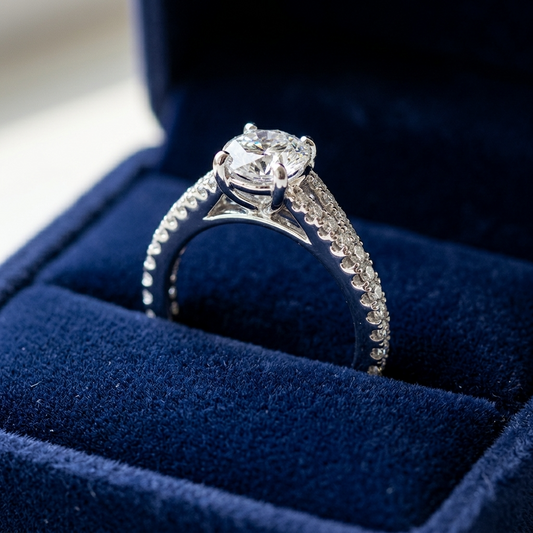
Pavé — small stones set close together in a continuous line, held by tiny beads of metal raised from the surface. It reads as a band of light rather than individual diamonds and it is the most popular by a distance.

Channel set — stones sit flush in a groove between two walls of metal, with no claws showing at all. The most secure and hard-wearing option, completely snag-free, and it suits square and rectangular stones especially well.

What diamond shapes are used as side stones?

Round brilliants are the most common and suit any centre stone — they are what most pavé and most claw-set shoulders use.

Princess and square cuts work well channel set, sitting edge to edge in a continuous line with no gaps.

Baguettes and tapered baguettes are the step-cut option. Long, rectangular and clean, they suit an emerald cut or asscher centre particularly well, and tapered ones narrow toward the band so the whole ring reads as one line.

Trilliants, half-moons, pears and trapezoids are used where you want a substantial single stone either side rather than a row — that is usually a three stone design rather than side stones in the narrower sense.

What are the most popular combinations for side stone rings?

Round centre with pavé shoulders — the most requested by a distance. Clean, versatile and it suits every shape.

Round centre with tapered baguettes — the timeless pairing. The baguettes narrow as they run toward the band, so the eye is drawn straight into the round centre and the whole ring reads as one continuous line. It has been made this way for a century and it still looks right.

Oval centre with graduated rounds — the side stones step down along the shoulders and lead the eye into the centre. Elegant and slightly traditional.

Emerald cut centre with tapered baguettes — step cut beside step cut, all straight lines. The most architectural combination there is.

Princess or radiant centre with channel set squares — geometry throughout, edge to edge, no claws showing. Hard-wearing and strongly modern.

Round or cushion centre with a pair of trilliants — a bolder shoulder than pavé, and closer to a three stone in feel.

Any centre with a hidden halo and plain shoulders — the light sits under the stone rather than beside it, so the band stays clean.

What gemstones look good as side stones?

Coloured stones either side of a white diamond centre make a ring genuinely individual, and it is a design we make often.

Sapphires are the most versatile — blue is the classic, but teal, pink and yellow all work beautifully and read as more unusual. Rubies give the strongest contrast against a white centre. Emeralds are softer and more romantic, though they want protecting in a setting that shields the edges.

Two smaller ones worth knowing about: spinel in grey, pink or red, which is harder-wearing than most people realise, and tanzanite for a violet-blue that nothing else quite matches.

The arrangement also works in reverse — a coloured centre stone with white diamond side stones — and you can use birthstones or stones that mean something to the two of you rather than choosing purely on looks.

We hold natural sapphires, emeralds, rubies and other coloured gemstones alongside the diamonds, so everything can be chosen and matched together. All made to order in our own workshop.

What's the difference between a three stone and a side stone ring?

Overlapping terms, and worth knowing. A three stone has one significant stone either side of the centre — the side stones are a feature in their own right. A side stone ring usually means smaller accent stones that support the centre rather than compete with it. A five stone sits between the two, with two stones each side.

In practice the line is blurry, and plenty of rings are both.

What are graduated side stones?

Stones that reduce in size as they move away from the centre, rather than staying the same. A straight or uniform run keeps every side stone the same size, which reads as clean and modern. A graduated run steps down progressively, which draws the eye inward toward the centre stone and gives a softer, more traditional line.

Graduated is the older look and suits a vintage-styled ring; uniform pavé is the more contemporary choice. Neither is better and it is worth seeing both.

Do side stones need to be matched?

Yes, and it matters most with larger ones. A pair of trilliants or baguettes either side of the centre need to agree on colour, clarity and outline, or the difference shows. With small pavé stones the matching is about consistency across the whole run rather than stone by stone.

They also need matching to the centre — side stones a grade or two warmer than the main diamond will read as slightly yellow against it, even when nobody can say why.

Will a wedding band sit flush against a side stone ring?

Yes. We design every ring we make so a wedding band sits flush against it, and we would rather get that right at the bench than have you discover the problem afterwards.

There is one honest exception: antique and vintage-style designs. Some period settings are built in ways that simply do not allow a straight band to sit tight — a raised or domed gallery that flares out at the base, engraved or milgrain shoulders that need clearance so the detail is not worn away, a low-set stone where the girdle sits close to the finger, or an original antique ring made in an era when nobody wore a matching band alongside it.

In those cases forcing a flush fit would mean altering the design and losing what makes it beautiful. The right answer is a shaped band, contoured to follow the profile of the ring — which we make, and which usually looks better than a straight band would have anyway. Some people also choose to wear the two on separate fingers, or leave a deliberate gap, which on a vintage ring can look entirely correct.

We will always tell you which situation you are in before we make anything.

What metals can a side stone ring be made in?

18ct white, yellow or rose gold, or platinum.

For the side stones specifically, a white metal head keeps them looking bright — small stones set in yellow gold pick up a warm outline from the metal around them. Platinum is the hardest wearing and holds fine claws and pavé beads securely over decades, which matters when a ring carries a lot of small stones.

Mixed metals work particularly well here. A yellow or rose gold band with a platinum or white gold setting for the stones gives you warmth on the finger and brightness where the diamonds are. On a channel set ring you can also run the channel walls in a contrasting metal, which is a subtle detail most people do not know to ask for.

Can I design my own side stone ring?

Yes — most of what we make is designed with the client rather than picked off a shelf. Bring a sketch, a photo, a screenshot, or just a description. We will talk through the centre stone, what runs alongside it, how it is set and how far down the band it goes.

Everything is made to order in our own workshop in Sydney, so the side stones are chosen and cut to sit correctly against your particular centre stone rather than dropped into a standard mount.

Are side stone rings harder to keep clean or maintain?

A little. More stones means more small claws or beads to check, and pavé collects hand cream the way a halo does. Worth a gentle clean with warm soapy water and a soft brush every couple of weeks, and having the settings checked every year or two.

Channel set is the easiest of the three to live with — no claws to catch or wear, and less for dirt to sit behind.

Do you sell lab-grown diamonds?

No. Every diamond we sell is a natural diamond, and we've never dealt in lab-grown, simulants or treated stones.

A lab-grown stone is a manufactured product. It's grown in a reactor over a few weeks, then mass produced in unlimited quantities in any size or grade. That's the fundamental difference: a natural diamond took billions of years to form and exists in finite supply, while a laboratory-grown one is a commodity with no ceiling on production. It shows in the pricing — as capacity has scaled, lab-grown prices have fallen steeply and continue to fall, and there is no established secondary market for them.

What you're buying with a natural diamond is scarcity and origin. Rare, and natural. It's why we've never sold anything else. Read our full comparison of natural and lab-grown diamonds.

What certification do your diamonds come with?

Our diamonds are independently certified, most commonly by GIA, with others graded by DCLA or HRD. The certificate is issued by the laboratory, not by us, and it accompanies the stone when it ships.

Can I see a diamond before I buy?

Yes. We are in Sydney's CBD and we see clients by appointment, so you can view stones side by side and compare them in person before deciding.

Can't find the diamond you're looking for?

Just ask us. Finding a particular stone is a large part of what we do, and there's no obligation when you enquire. We'll do our best to source the finest quality natural diamond for you.

Our list is smaller than you'll see on some sites, and that's deliberate. Every diamond here is one we've looked at properly before listing it. Many diamond websites show tens or hundreds of thousands of stones drawn from shared trade lists — diamonds held elsewhere that the seller hasn't seen and won't see unless you order one. It looks like more choice, but nobody has assessed the individual stone, and two diamonds with the same details on paper can look quite different.

So if what you want isn't here, tell us what you're after and what you'd like to spend. We'll look for it, check anything we find ourselves, and only show you stones we'd be happy to recommend. If we can't find the right thing at your budget, we'll say so and talk through the options — sometimes a small change in colour, clarity or size makes all the difference.

Either way, you'll only ever be offered a diamond that we have complete confidence in recommending to you, and it will not just be based on the cheapest price.

Do you make the ring as well as supply the diamond?

Yes. Most clients select the diamond first and then the setting — either one of our existing designs or a fully custom piece made to your description or an image. Everything is handmade by our own jewellers.

I'm not in Sydney — can I still buy from you and have jewellery made?

Yes. We have many loyal customers all over Australia, and we're able to consult by phone and share photos and videos whenever possible.

Distance is not the obstacle people expect. We'll guide you through the options and select the finest quality diamonds and gemstones for you, so you can make an informed decision from wherever you are. The same applies to custom made engagement rings and jewellery — we'll talk you through it and keep you across it as it's made.

We deliver fully insured anywhere in Australia — every capital city, and regional and rural addresses just the same.

If you are able to come in, we'd always rather show you the stones in person — and if you're travelling to Sydney, appointments can be arranged on weekends.